How Awning Arms Fail in Florida's Climate
RV awning arms - the folding or scissor-type support arms that hold the awning at the correct pitch when extended - are typically made from aluminum or steel with a powder-coat finish. They are designed to support the weight of the awning fabric under calm to light wind conditions, but they are not engineered to withstand the 50 to 70 mph wind gusts that Florida's afternoon thunderstorm cells can produce with minimal warning.
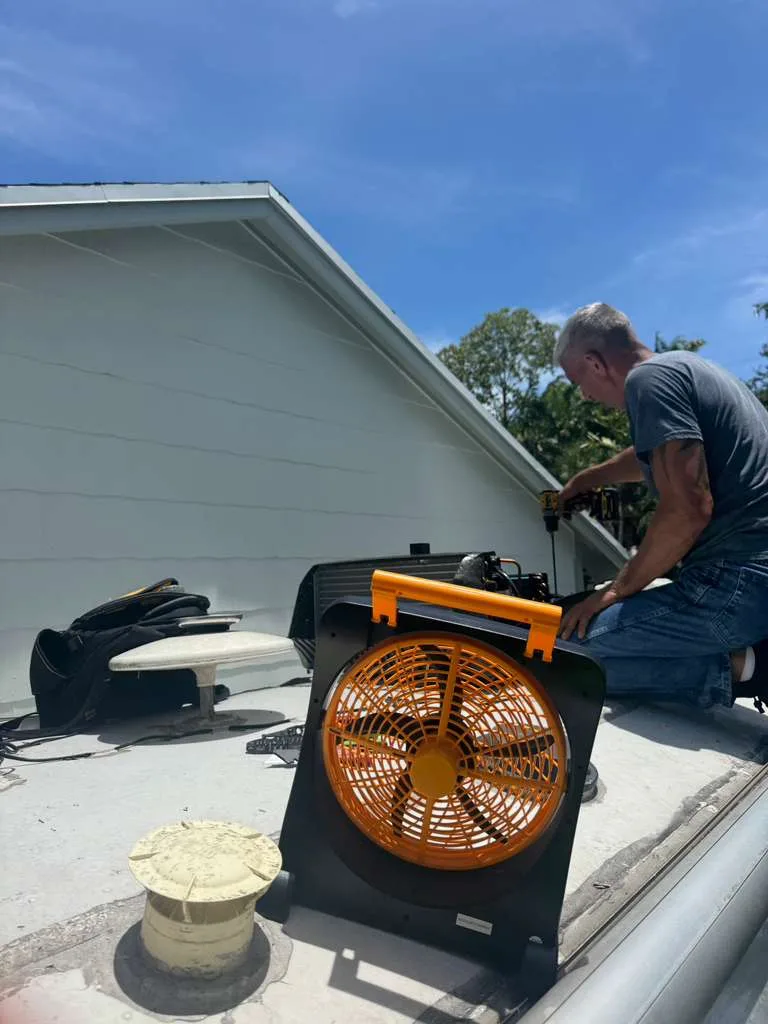
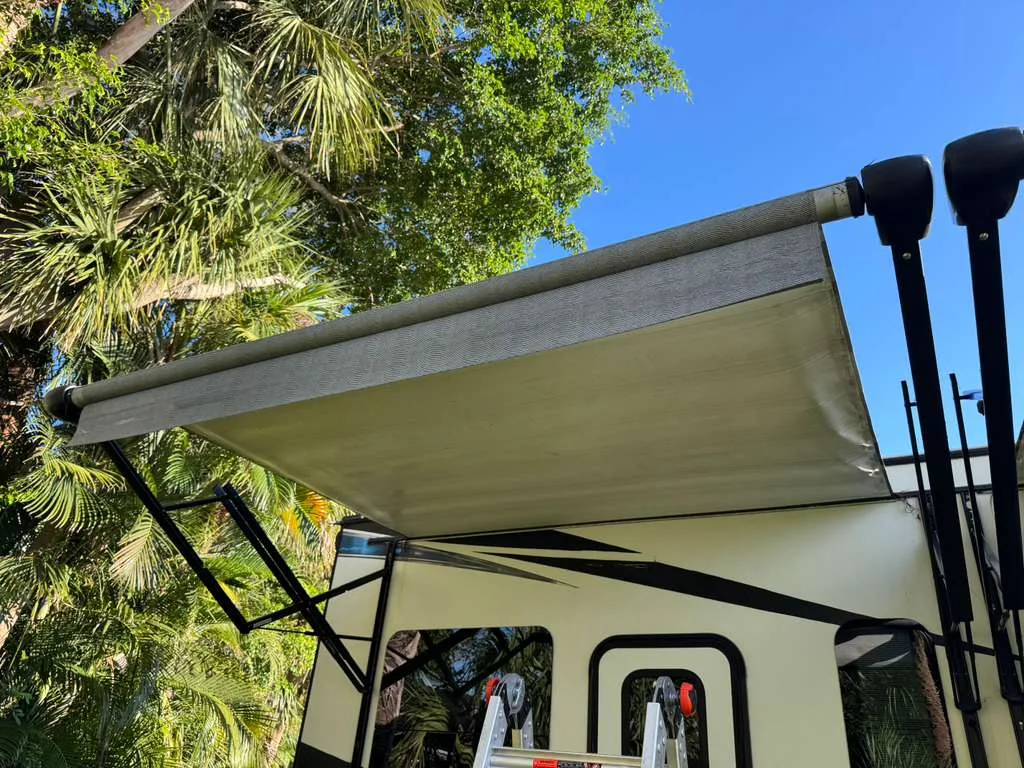
Wind loading on an extended awning creates significant lateral forces on the arms. A gust that catches the awning from below (an upward gust common in convective thunderstorms) creates a lifting force that can bend the arms outward or snap a joint. A gust from the side creates a twisting force that bends the lower arm rail and can separate the arm from its mounting bracket on the RV side wall.
We see awning arm damage most commonly after summer squall events in Winter Haven. A Friday afternoon thunderstorm that moves through while an owner is at the pool or in town can bend one or both awning arms in the 10 to 15 minutes the storm is present. The awning may still extend and retract afterward, but with a bent arm that puts asymmetric stress on the roller tube and motor with each cycle.
Types of Awning Arm Damage
Bent arm rail: the lower horizontal rail of the arm is bowed or bent from wind loading. Mild bends can sometimes be straightened; significant bends require the lower rail to be replaced rather than bent back (aluminum that has yielded cannot be returned to its original strength through cold straightening).
Broken joint: the pivot joint connecting the upper and lower arm sections has broken or separated. Most awning arm joints use a pin-and-socket design that can fail from overload. Joint repair involves replacing the damaged joint assembly with a new component.
Mounting bracket failure: the bracket that secures the arm to the RV sidewall has pulled away from the wall, stripped its fasteners, or broken at a stress concentration point. Bracket repair may involve filling the original holes with appropriate material before re-drilling at new locations.
Complete arm replacement: when damage is extensive or the arm cannot be reliably repaired, we replace the arm assembly with a new one matched to the original awning system. Arms for most common Carefree, Dometic, and A&E systems are available in standard lengths.
Preventing Awning Arm Damage in Winter Haven
The most effective prevention is retracting the awning at the first sign of approaching weather. Florida's thunderstorm activity is highly predictable - afternoon convective storms develop between 12 PM and 5 PM during summer months. Checking the radar before leaving the RV and retracting the awning if storm cells are visible within 50 miles of your location significantly reduces wind damage risk.
After any storm, inspect the awning arms for any sign of bowing, joint looseness, or bracket movement before operating the awning through another extension cycle. Stress-damaged components that appear intact may fail catastrophically on the next deployment.