How Absorption RV Refrigerators Work - and Why Florida is Hard on Them
Absorption refrigerators - the Dometic and Norcold units found in the vast majority of RVs - cool through a chemical cycle rather than a mechanical compressor. A heat source (propane flame or electric heating element) heats an ammonia-water solution, separating the ammonia as a vapor that rises through coils and eventually condenses in the cooling unit. The condensation releases the refrigerant's latent heat through the back of the refrigerator and out through roof vents above the unit, creating the cooling effect inside the box.
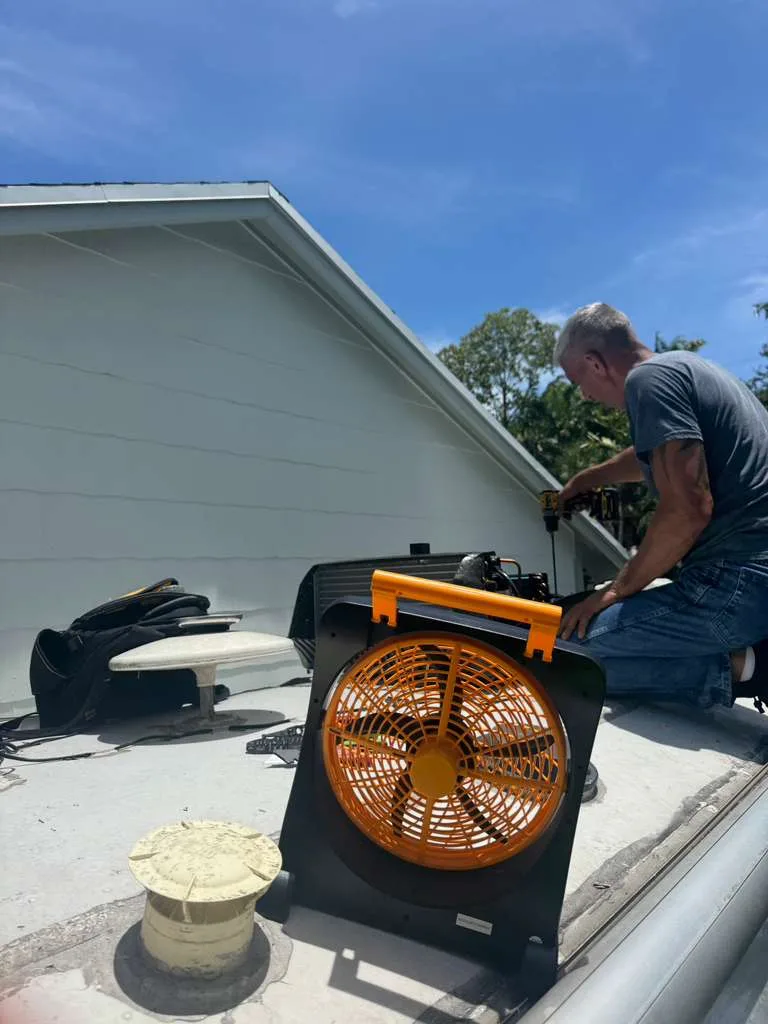
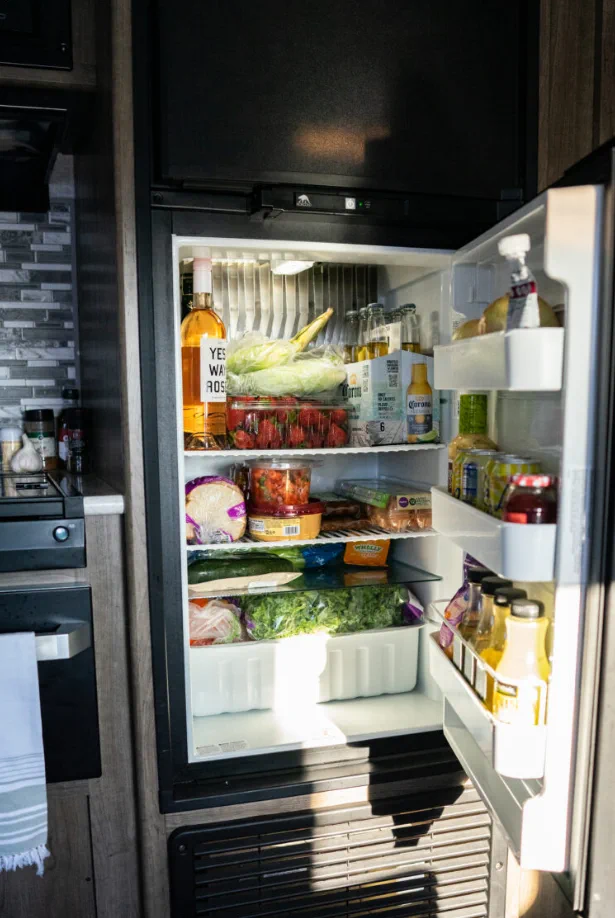
This process depends on gravity (the ammonia-water solution must flow correctly through the cooling unit), heat input (the heat source must be maintained at the correct temperature), and - critically - adequate ventilation above the unit. The condenser coils at the back of the refrigerator release heat through natural convection through roof vents. If these vents are blocked, damaged, or if the ambient temperature above the refrigerator is too high, the refrigerator cannot reject heat efficiently and cooling capacity drops dramatically.
Florida's climate creates challenges at every step. The ambient temperature in an outdoor-stored RV's refrigerator compartment on a summer day can reach 120 to 130 degrees in the back wall area.
At these temperatures, absorption refrigerators are working at the extreme edge of their design envelope. The same unit that keeps food cold at 50 degrees in a Michigan spring may struggle to maintain 40 degrees in a Winter Haven July - not because it's failing, but because it's operating in conditions that exceed its design assumptions.
Common RV Refrigerator Failure Patterns
Absorption refrigerators fail in mode-specific patterns that guide diagnosis.
Not cooling on electric only: the electric heating element has failed or its circuit is interrupted. The propane mode works because the propane burner provides the same thermal input through a different mechanism. Element replacement is the fix for this pattern.
Not cooling on propane only: the igniter, thermocouple, gas valve, or burner tube has failed. The electronic ignition may be clicking without producing a spark, the thermocouple may have failed (allowing the gas valve to shut off after each ignition attempt), or the burner orifice may be blocked with debris.
Not cooling on either mode: this serious pattern indicates either the cooling unit (the sealed ammonia system) has failed, the refrigerator is severely unlevel, or both heat input modes have failed simultaneously. A cooling unit that has failed shows specific symptoms: a yellow or white residue around the back of the refrigerator and an ammonia smell (ammonia leakage from the sealed system).
Poor performance in hot weather without complete failure: improper ventilation is the most common cause. We check the roof vents above the refrigerator for obstruction, ensure the refrigerator door seals are intact, verify the unit is within 3 degrees of level, and assess whether the overall cooling unit capacity is adequate for Florida's ambient conditions.
The Cooling Unit Question: Repair or Replace?
When an absorption refrigerator's cooling unit fails, the question is whether to replace only the cooling unit or replace the entire refrigerator - or convert to a 12V residential-style compressor refrigerator.
Cooling unit replacement is economical for refrigerators that are otherwise in good condition and under 10 years old. Cooling units for Dometic and Norcold units cost $400 to $700 for the part, plus labor - significantly less than a new refrigerator but more than other component repairs.
Full refrigerator replacement with a new Dometic or Norcold unit makes sense for refrigerators over 12 years old, where additional components are likely near end-of-life.
Conversion to a residential compressor refrigerator is an increasingly popular option, particularly for Florida full-timers where the absorption refrigerator's heat-sensitivity in summer is a real limitation. A 12V compressor refrigerator from Dometic (their 12V series) or a residential electric unit provides better cooling performance in Florida heat, lower energy consumption, and simpler failure modes. Conversion typically runs $800 to $1,500 for the appliance and installation at your location.