Why Florida Full-Timers Convert to Compressor Refrigerators
Absorption refrigerators - the standard in most RVs for decades - were designed for seasonal camping in moderate climates. In Florida's year-round heat, their performance limitations become real daily inconveniences rather than theoretical concerns.
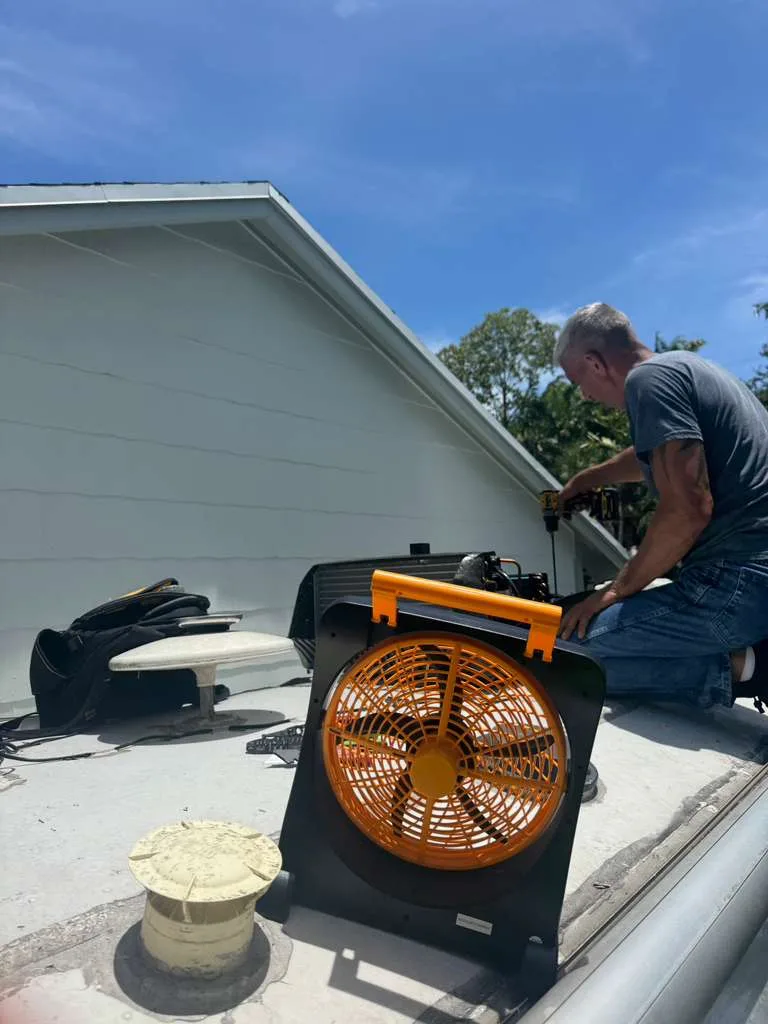
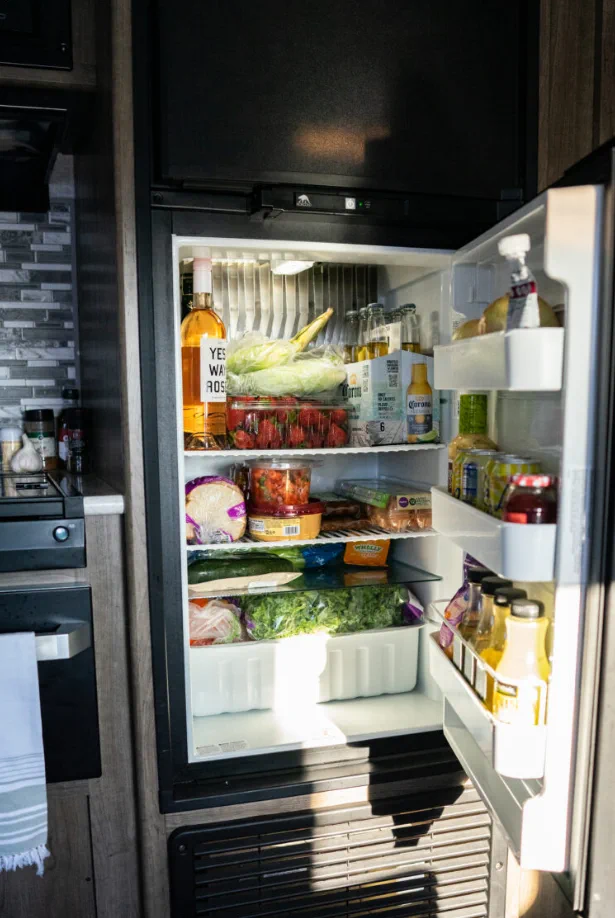
The fundamental problem is that absorption refrigerators reject heat through natural convection, relying on the temperature difference between the condenser coils and the ambient air to carry heat away. In Winter Haven's summer conditions, when the temperature behind the refrigerator (in the compartment between the RV wall and the back of the fridge) reaches 110 to 120 degrees, there is simply not enough temperature differential to drive efficient heat rejection. The result: your absorption fridge struggles to maintain 40 degrees inside while the exterior campground temperature sits at 95 degrees.
Compressor refrigerators (both 12V DC and 120V residential units) operate on the same principle as household refrigerators - a mechanical compressor drives the refrigerant cycle with significantly more force than the natural convection of absorption units. They cool effectively regardless of ambient temperature, use less energy, and can maintain colder temperatures for food safety.
For Winter Haven full-timers, campground-connected snowbirds, and anyone who has wrestled with keeping food cold through a Florida summer, the performance difference is substantial. A 12V compressor refrigerator from Dometic's CRX or CFX series will keep drinks at 36 degrees in 95-degree heat. An absorption unit in the same conditions may struggle to hit 45 degrees.
Conversion Options: 12V Compressor vs Residential Electric
Two categories of replacement refrigerators work for RV conversion.
12V compressor refrigerators (Dometic, ARB, Engel, Iceco) run on DC power directly from the battery bank. They are highly efficient, designed specifically for RV environments, and can operate for extended periods on solar or battery power.
Capacities range from 35 liters (small travel trailer use) to 95 liters (suitable for full-time couple use). They are more expensive per liter than residential units but offer the flexibility of 12V operation without shore power.
Residential electric refrigerators (standard 120V units from major appliance brands) provide the largest capacity for the lowest cost per cubic foot. A 10-cubic-foot apartment-sized refrigerator typically costs $400 to $700 versus $800 to $1,500 for a comparable 12V unit.
However, they require 120V power - either shore power or an inverter - at all times. For campground-connected RVers who rarely boondock, this is a reasonable tradeoff.
The conversion decision depends primarily on your power situation. If you have shore power access 90 percent of the time and only occasionally dry camp, a residential unit is a cost-effective choice. If you do significant boondocking, a 12V unit that can run on solar-charged batteries is the better investment.
The Conversion Process in the Field
RV refrigerator conversion begins with measuring the existing refrigerator opening dimensions precisely - the replacement unit must fit in the existing cabinet opening or the cabinet must be modified. We bring measuring tools and the experience to assess whether modification is needed before sourcing the replacement.
We remove the old absorption refrigerator (which requires disconnecting the propane line, the 12V DC power, and the 120V AC power - we cap the propane line properly with the correct fitting after removal), modify the cabinet interior as needed, and install the replacement unit. For residential electric units, we verify the 120V outlet inside the cabinet is properly wired for the load. For 12V units, we run appropriate gauge DC wiring from the house battery bank to the refrigerator location.
After installation, we verify temperature performance over a 30-minute test period before leaving. A properly installed 12V compressor unit should reach 40 degrees within 15 to 20 minutes from ambient.