What Causes RV Floor Water Damage
RV floor water damage in Winter Haven has three primary sources. The first and most common is slide-out seal failure: the rubber seals around extended slide rooms develop cracks and separations that allow rainwater to enter at the slide room perimeter and wick down the wall into the floor substrate below the slide room. The soft spot that develops beneath a leaking slide room typically follows the outline of the slide room's base, covering the floor area where the slide wall meets the main floor structure.
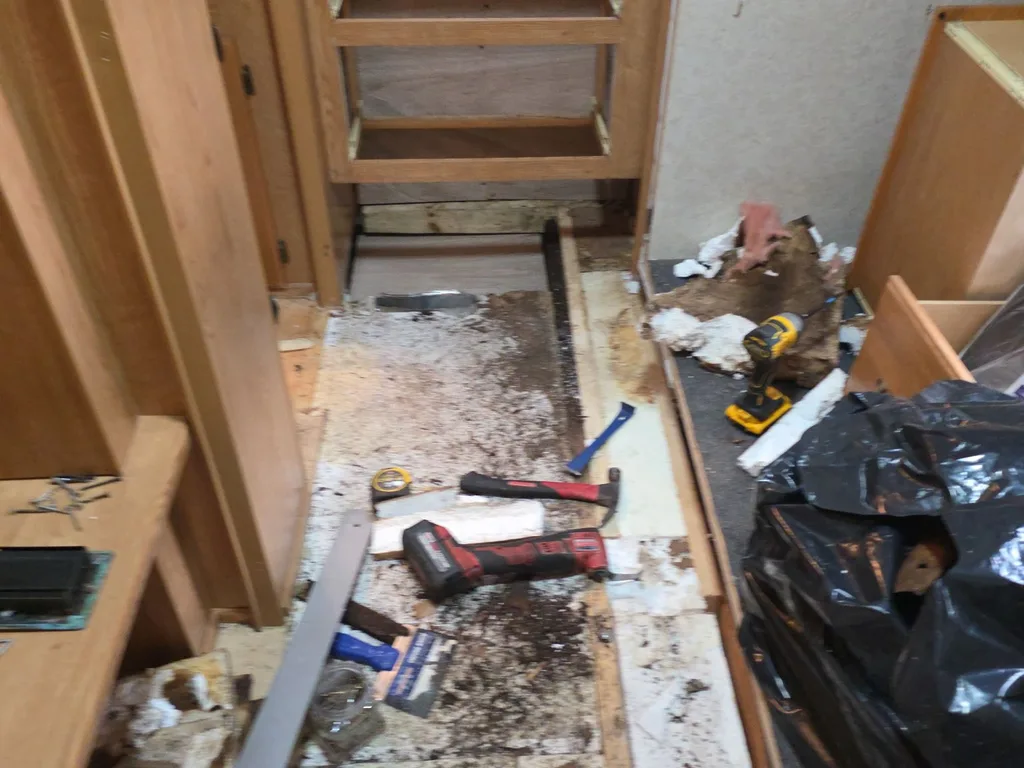
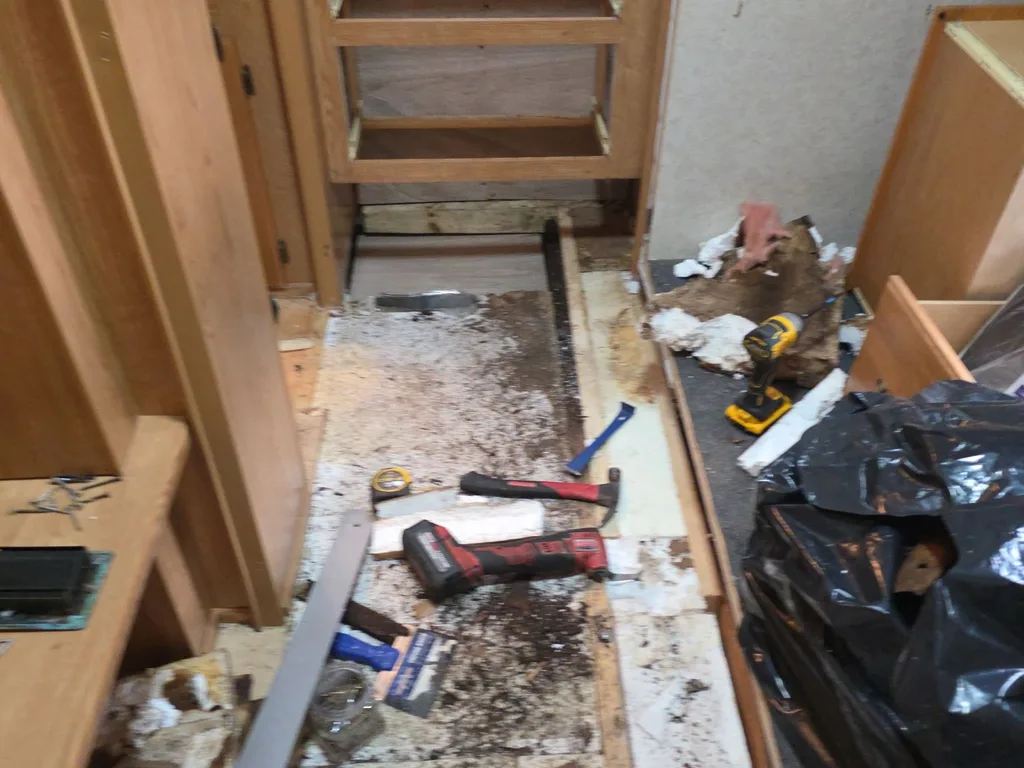
The second source is plumbing system failures. A PEX fitting that blows under high campground water pressure, a water pump connection that loosens, or a water heater that develops a tank leak can release fresh water into the enclosed underbelly or floor area of the coach. Fresh water in a Florida RV's enclosed space produces mold within days and begins deteriorating plywood substrate within weeks.
The third source is roof or wall infiltration. Water that enters through a failed roof seal may travel downward along interior wall framing and eventually reach the floor. This source is harder to identify because the floor damage can be far from the roof leak entry point.
Assessing RV Floor Damage Extent
The visible soft spot is rarely the full extent of the damage. Water that has saturated one area of plywood substrate spreads laterally through the wood grain and wicks into adjacent panels. We use systematic moisture meter mapping to determine the full damage extent before cutting into any flooring material.
Our assessment covers the identified soft area plus a 12 to 18 inch margin in all directions. Moisture readings above 16 percent in any area indicate wet wood that should be treated or replaced. Readings above 25 percent indicate actively saturated wood that has high rot risk and should be replaced.
We also assess the substructure: the wooden floor joists and cross members beneath the plywood decking. If moisture has reached these structural members, the repair scope expands to include structural framing - a more involved repair that we scope completely before quoting.
Floor Damage Repair Process
Floor damage repair in Winter Haven always begins with sealing the water entry point. Replacing the floor without stopping the source of water only creates new floor damage.
After sealing, we remove the floor covering (vinyl plank, carpet, or linoleum) in the affected area, saving intact sections for reuse where possible. We cut out the damaged plywood substrate to the boundaries indicated by our moisture meter readings, removing all material that reads above 12 percent moisture content. Remaining structural wood that reads between 12 and 16 percent is treated with a borate-based wood preservative before new substrate is installed.
We install replacement plywood of equivalent specification (typically 3/8 to 3/4 inch, depending on the original substrate) with appropriate adhesive and fasteners, then restore the floor covering. We use moisture meter verification at completion to confirm the repaired area reads at ambient moisture levels.