The RV AC Blower Motor: What It Does and How It Fails
Your RV air conditioner is divided into two separate air-handling functions: the outdoor condenser section on the roof that rejects heat from the refrigerant, and the indoor evaporator section that circulates air from your living space across the cold evaporator coils and pushes cooled air through your ceiling vents and duct system. The blower motor drives the indoor evaporator fan - the component responsible for that airflow.
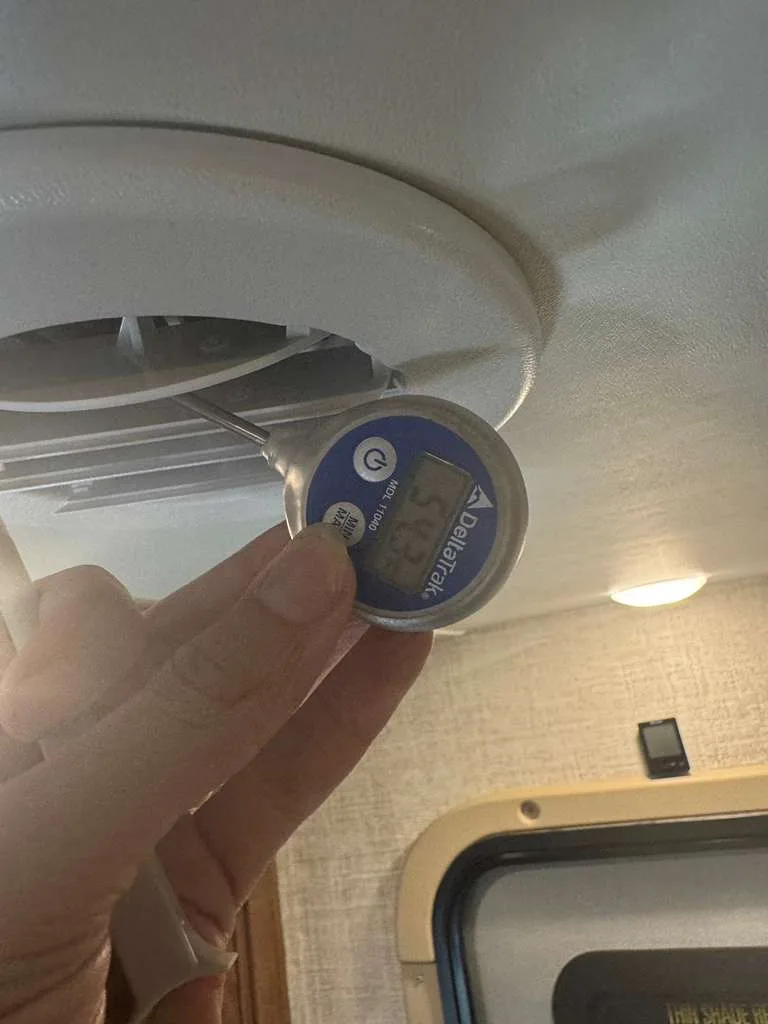
Without a functional blower motor, the compressor and refrigerant system may be operating perfectly, but you will feel little to no airflow from the vents. The paradox is that the unit may actually be cooling effectively at the coil level, but the cooled air is not reaching your living space because the fan isn't moving it there.
Blower motors in RV AC units are subject to specific stresses in Florida's environment. The combination of year-round operation, high humidity, and the vibration of road travel over Florida's highway surfaces creates conditions that age motor bearings, corrode windings, and degrade the motor's electrical insulation faster than in seasonal or stationary installations.
Signs of Blower Motor Failure in Your Winter Haven RV
Blower motor failure presents in several distinct patterns depending on the specific failure mode.
Weak Airflow With Unit Running
If the compressor is running and you can feel the unit getting cold on the rooftop (either by touching the housing or by seeing condensation dripping from the unit as it should in Florida's humidity), but the airflow from the ceiling vents is noticeably weaker than normal, the blower motor is the first component to investigate.
A motor with failing bearings gradually reduces in speed before seizing completely. The motor runs, but at below-rated RPM, which reduces airflow proportionally. This is also the failure pattern produced by a failing motor run capacitor (separate from the compressor capacitor on dual-capacitor systems), which we test simultaneously.
Grinding or Squealing From the Ceiling Unit
Any unusual mechanical noise from the air handler section - the part mounted inside your ceiling - indicates bearing failure in the blower motor. A grinding sound is bearing wear with metal-on-metal contact.
A squealing sound is early bearing failure where lubrication has degraded. Both indicate imminent complete failure.
Do not continue to run a grinding or squealing blower motor. The bearing can seize suddenly, causing the motor shaft to stop while the motor is energized - a condition that overheats the motor windings and can cause the motor to smoke or trip a breaker. If you hear either of these sounds, turn the AC fan off and call us at (863) 294-7800.
No Airflow With Compressor Running
Complete blower motor failure produces no airflow from the vents while the compressor continues to operate. This creates a secondary problem: the evaporator coil rapidly accumulates ice because there is no airflow to carry heat from the room across the coil. You may notice the unit producing less and less airflow until stopping entirely - the coil has frozen solid.
Turn the AC off immediately if you notice no airflow. Running the compressor with a frozen coil can, in severe cases, allow liquid refrigerant to reach the compressor - a condition that damages the compressor's internal components and turns a blower motor replacement into a much more expensive repair.
The Blower Motor Replacement Process in the Field
Blower motor replacement in an RV is an interior repair - we access the motor from inside the coach, through the ceiling-mounted air handler assembly. The process varies slightly between manufacturers (Dometic's assembly differs from Coleman-Mach's in detail) but follows the same general sequence.
We begin by removing the interior trim ring and diffuser panel - the decorative cover that conceals the air handler and distributes air from the ceiling vents. This exposes the air handler box and the motor assembly inside. We photograph the wiring configuration and motor mounting before disconnecting anything.
The blower wheel (the centrifugal fan that moves the air) is attached to the motor shaft. In most assemblies, it must be removed from the shaft before the motor can be extracted from the housing.
Some wheels are retained by a set screw; others use a friction fit. We use appropriate removal tools to avoid bending or cracking the plastic wheel.
The failed motor is disconnected from its wiring, unbolted from the mounting plate, and removed. The replacement motor must match the original's shaft diameter, rotation direction, RPM rating, and electrical specifications. We carry blower motors for the most common RV AC models on the service truck.
After installation, we run the unit through a complete test cycle - verifying airflow strength at each vent, listening for any bearing noise, and measuring supply air temperature to confirm the unit is cooling properly with the new motor providing correct airflow.
Blower Motor Replacement Cost in Winter Haven FL
Blower motor replacement for most common RV AC models runs $200 to $350 at your location, including parts and labor. The cost varies by motor specification and by how accessible the air handler is in your specific RV.
Some Class A motorhomes and older rigs have air handler units in storage bays or in locations that require more disassembly to access, which increases labor time. We estimate the access requirements before quoting and include everything in the flat-rate price.
Compared to the alternative - a compressor that suffers damage from a frozen coil caused by a failed blower motor that kept running - the blower motor replacement is a straightforward and well-defined repair.