How RV Thermostats Work and Why They Fail
The thermostat in your RV air conditioning system is the command center. It continuously measures the interior temperature using a small thermistor sensor, compares that reading to your set point, and sends control signals to the AC unit to start, stop, or change mode. It also controls the fan speed (high, medium, low), heat mode on units with heat strips, and any automatic features like programmable schedules on digital models.
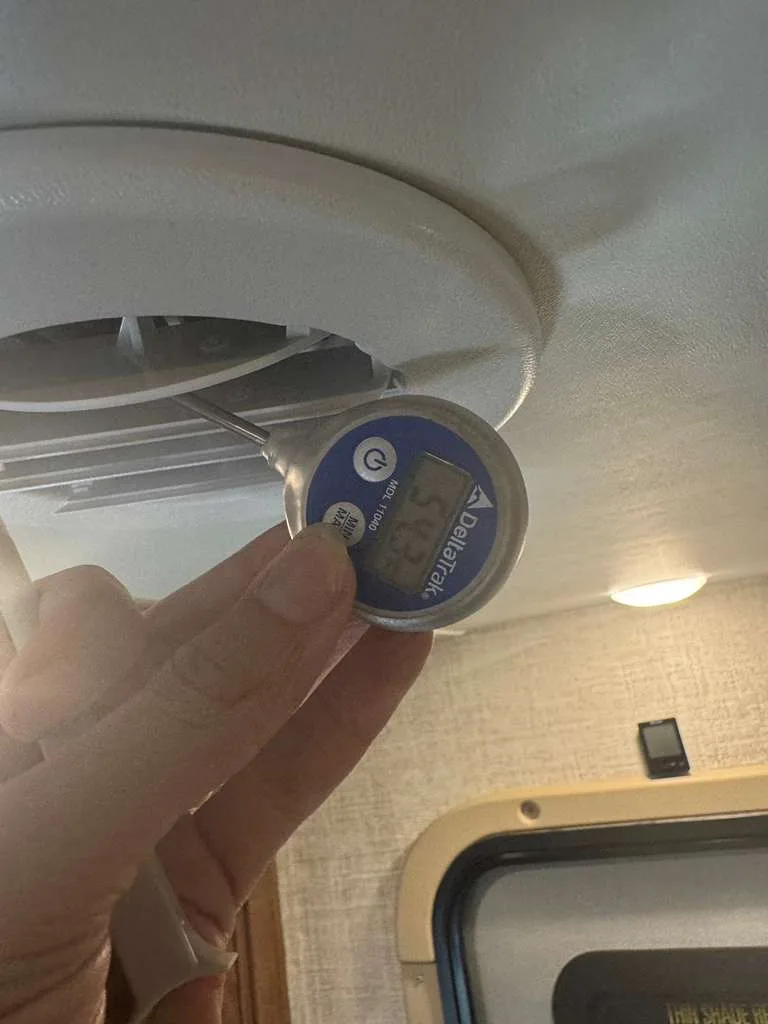
RV thermostats are not the same as residential thermostats. They use different voltage levels (many RV thermostats operate on the AC unit's internal 24-volt control circuit or the coach's 12-volt DC system) and different communication protocols. A standard residential programmable thermostat from the hardware store will not work as a direct replacement for an RV thermostat.
Thermostat failures in Winter Haven RVs occur from several causes. Vibration during travel loosens internal connections and can crack solder joints on circuit boards.
Humidity cycling - particularly pronounced in Florida's climate - corrodes the contact pins and sensor connections. The thermistor itself can drift out of calibration over time, causing the thermostat to read 80 degrees when the interior is actually 72 degrees, leading to the AC running when it shouldn't or not running when it should.
Signs Your RV Thermostat Needs Replacement
Thermostat problems can masquerade as AC unit problems, which is why proper diagnosis matters before replacing any component.
Blank or Partially Blank Display
A blank display is alarming but not always a thermostat failure. The first diagnostic step is checking the power supply to the thermostat.
Most RV thermostats receive power from the coach's 12-volt DC system through a dedicated circuit. A blown fuse, a tripped breaker, or a loose connection behind the thermostat wall plate can produce a blank display on a thermostat that is otherwise functional.
We check power at the thermostat wiring before concluding the unit is failed. In our experience across Winter Haven service calls, approximately 40 percent of blank thermostat displays are caused by power supply issues rather than thermostat component failure.
If power is present and the display is still blank, the thermostat's circuit board or display module has failed and the unit requires replacement.
Thermostat Reads Incorrectly
A thermostat that reads 78 degrees when the interior is clearly and uncomfortably warmer is causing your AC to shut off before the space is adequately cooled. Conversely, a thermostat reading too warm will cause the AC to run continuously, driving up energy consumption and stressing the compressor unnecessarily.
Thermistor calibration drift is common in thermostats that have been in Florida heat for more than 5 to 7 years. The small temperature-sensing component changes its electrical resistance characteristics over time, leading to systematic over or under-reading. This is not adjustable in most RV thermostats - replacement is the fix.
AC Won't Turn On or Off Properly
A thermostat that fails to send the correct start or stop signal produces either an AC that won't engage at all (despite proper power and a working AC unit) or an AC that runs continuously without shutting off. Both patterns cause comfort problems and, in the continuous-run case, compressor wear.
We verify the thermostat signal output with a meter before replacing the unit. If the thermostat is outputting the correct signal and the AC unit isn't responding, the problem is in the unit's control board rather than the thermostat.
Thermostat Replacement and Programming
RV thermostat replacement requires matching the replacement unit to the communication protocol and physical interface of your specific AC. Dometic systems use the Dometic single-zone or dual-zone thermostat.
Coleman-Mach systems use their proprietary thermostat series. Advent Air units use Advent-compatible controls.
Cross-brand thermostats are sometimes advertised as universal replacements but frequently have compatibility issues with specific AC unit firmware. We use manufacturer-approved replacement thermostats to avoid these complications.
After installation, we configure the thermostat's settings to match your cooling preferences and the capabilities of your specific AC unit. If your replacement thermostat has programming features your previous unit lacked - scheduled setbacks, temperature limits, or remote sensor options - we configure those as well.
We run a full operational test cycle before considering the job complete: AC turns on when temperature exceeds set point, fan operates at commanded speed, AC shuts off when set point is reached, and temperature display accuracy is verified with a calibrated thermometer.
Upgrading to a Digital or Smart RV Thermostat
If your RV has a standard analog thermostat - the kind with a simple temperature wheel and on/off/auto switches - replacement is an opportunity to upgrade to a digital thermostat with actual temperature display and tighter control accuracy.
For Dometic systems, the Dometic CT thermostat and the RV Products dual-zone thermostat are common upgrades that provide digital display and more precise control. For Coleman-Mach, their AcuZone digital thermostat family offers programmability that analog units lack.
We do not recommend trying to install a residential smart thermostat like a Nest or Ecobee in an RV. These units are not compatible with the control voltage and communication protocols used in RV AC systems.