Why RV Roof Leaks Are an Emergency in Winter Haven
An active RV roof leak is a time-sensitive situation in Winter Haven that most RV owners underestimate until the damage is already extensive. Florida's daily afternoon thunderstorms in the summer months - June through September - mean a roof that has a compromised seal can admit water multiple times per week during peak rainy season. Each rain event extends the water damage deeper into structural wood, ceiling insulation, and wall framing.
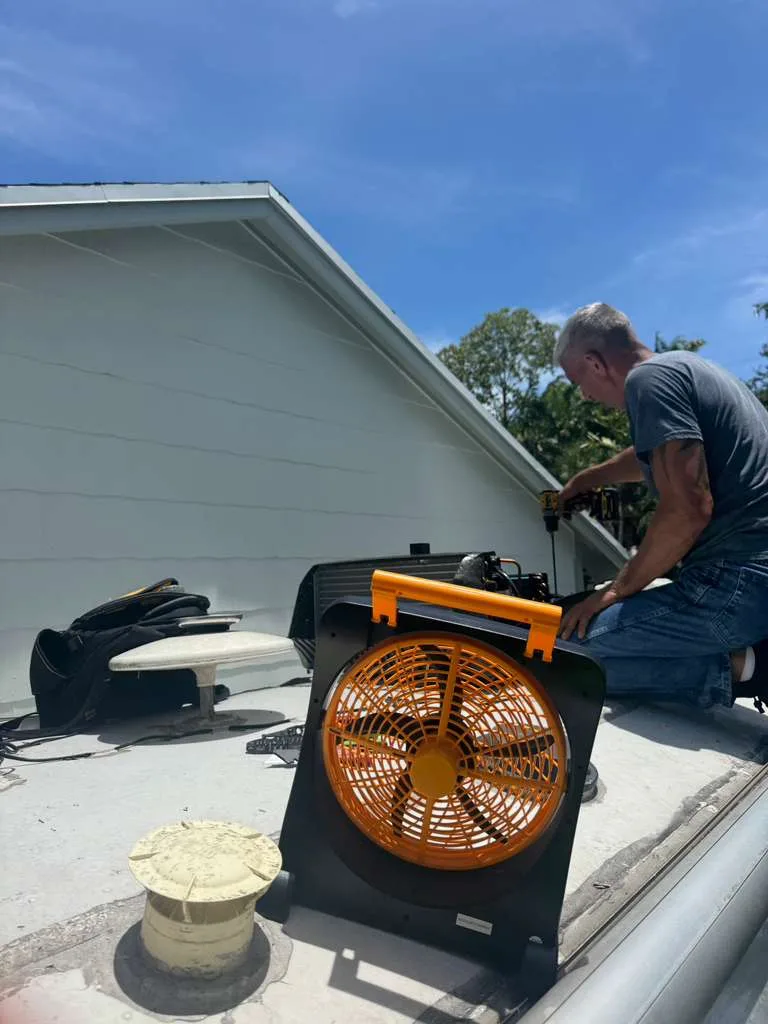
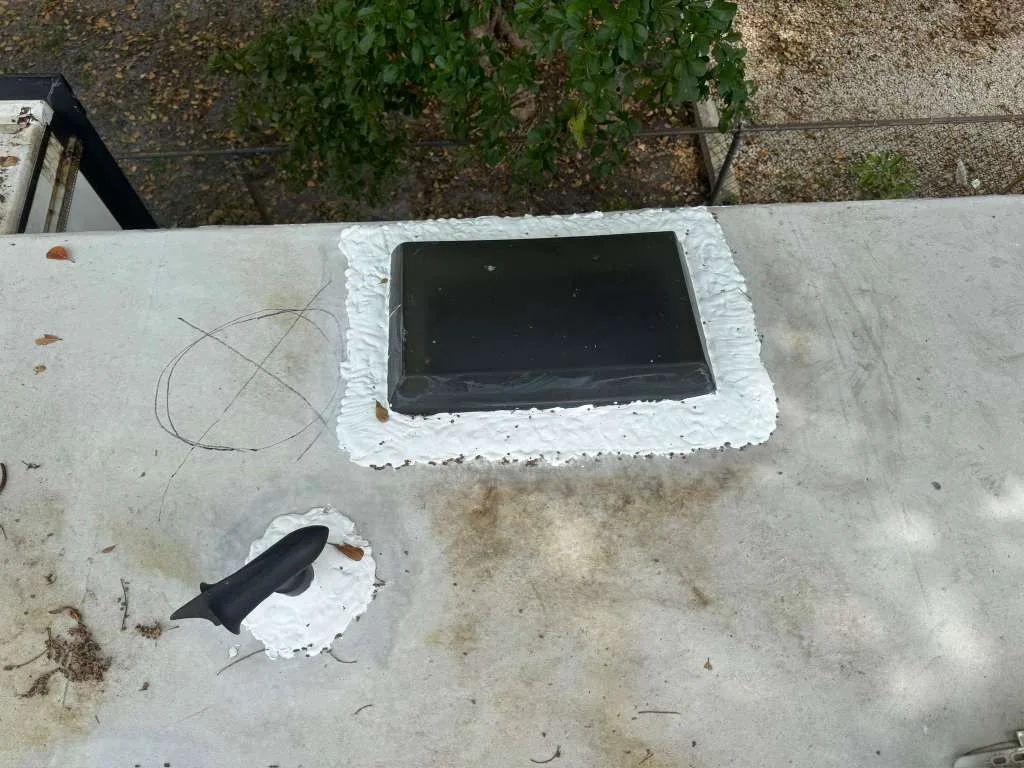
The relationship between a small seal failure and the eventual repair cost follows an exponential curve in Florida's humid climate. A lap sealant failure around a roof vent that would cost $150 to repair in October may require $2,000 to $4,000 in structural repairs if it leaks through an entire summer without intervention. We have seen instances where owners discovered a water stain in spring, assumed it was minor, and returned in fall to find the ceiling panel completely saturated and the roof decking rotted through.
This is why we treat roof leak calls with urgency. We schedule same-day service for active leaks whenever possible, and we address the water entry point before assessing and repairing any interior damage - stopping the ongoing infiltration is always the first priority.
How Water Gets Into Your RV Roof in Florida
Understanding the common entry points for RV roof leaks helps you recognize warning signs before staining appears on your ceiling.
AC Unit Base Seals
The flange that mounts your rooftop AC unit to the roof is sealed with a rubber gasket inside the unit and lap sealant around the outside perimeter. Florida's UV radiation degrades this sealant faster than almost any other climate. We find cracked or separated AC base sealant on the majority of outdoor-stored Winter Haven RVs that haven't been inspected in 18 to 24 months.
Water that enters at the AC base typically appears on the ceiling directly below the unit or, more commonly, travels along the ceiling structure and appears several feet away from the unit at a lower point - often above a cabinet or at the wall-ceiling junction.
Roof Vent Base Seals
Every roof vent - including bathroom vents, kitchen vents, Fantastic Fan covers, and any roof accessory mounted through the membrane - has a perimeter seal that can fail. Vent base seals are typically the smallest failure areas and produce the most puzzling water entry patterns because the water travels the greatest distance from the actual entry point to where it appears inside.
A failed bathroom vent seal 15 feet from the front of the RV may produce a water stain at the front kitchen window because water flows downhill along the roof structure to the lowest accessible point.
Slide-Out Roof Corners
The four corners where slide-out rooms meet the main roof structure are high-stress sealant points. Each time the slide extends and retracts, the sealant at these corners flexes. Over hundreds of cycles in Florida's UV environment, this flex point develops micro-cracks that eventually open under water pressure during heavy rain.
Slide-out corner leaks are among the most damaging because water enters at the corner and runs down the side wall of the slide room, saturating the wall framing and substrate before appearing as a stain at the bottom of the slide room wall.
Our Roof Leak Tracing Process
Roof leaks in RVs almost never originate directly above where they appear inside the coach. Water enters through a seal failure, then flows along roof structural members, ceiling joists, or wall studs to find the lowest accessible point - which may be several feet from the entry point.
We begin our leak diagnosis inside the coach, examining the stain pattern and following the moisture to its highest accessible point. We then map potential entry points on the roof surface that correspond to that pattern. Using a garden hose, we test the roof in sections - starting from the lowest suspected entry point and working upward - with one person inside watching for water appearance while the other applies water systematically on the roof.
This section-by-section hose test is more reliable than visual inspection of sealant alone, because hairline cracks in sealant that are invisible to the eye become active water paths under water pressure. We locate the exact entry point rather than guessing and applying sealant everywhere, which can obscure the actual failure and give a false sense of security.
Once we have identified and repaired the entry point, we address any interior damage - replacing saturated insulation, drying structural wood with moisture meter verification, and addressing any mold growth with appropriate treatment.
Emergency RV Roof Leak Repair at Your Location
When you call us with an active roof leak, we arrive with Dicor 501LSW lap sealant, EternaBond RoofSeal tape, and the tools to address most common leak sources on-site. For seam failures, we apply EternaBond as a permanent repair rather than relying on sealant alone - EternaBond creates a waterproof bond that will outlast the surrounding material.
For severe leaks during ongoing rain, we can apply a temporary waterproof cover while we locate the permanent entry point to prevent ongoing water entry while diagnosis continues. This is not our preferred approach, but it protects against continued damage in emergency situations.
After the repair is complete, we conduct a post-repair hose test to verify the leak source has been fully addressed before we leave. We do not consider the job complete until water flow from the repaired area produces no interior response.