Why RV Roof Sealing Is the Highest-Value Maintenance in Florida
The arithmetic of RV roof maintenance in Winter Haven is straightforward and compelling. A comprehensive roof seal application costs $150 to $350 - roughly the price of two tanks of diesel fuel.
A roof leak that goes unaddressed through one Florida rainy season costs $600 to $4,000 to repair depending on how far the water damage progresses. A roof that develops structural damage over 2 to 3 seasons of unchecked infiltration can cost $4,000 to $12,000 to fully remediate.
Florida's environment creates the conditions for roof seal failure faster than almost any other climate in North America. The combination of UV index (among the highest in the country), daily thermal cycling from overnight lows in the 60s to afternoon highs in the 90s, and daily afternoon thunderstorms from June through September creates a sealant failure environment that demands regular attention.
We find active or developing seal failures on the majority of outdoor-stored Winter Haven and Polk County RVs that haven't been professionally sealed in the past 18 months. If you are storing your RV outdoors and have not had the roof professionally sealed in 2 or more years, you almost certainly have at least one failing seal point.
What Happens to Roof Sealant in Florida
RV lap sealant - typically a butyl or polymerized sealant designed to remain flexible across a wide temperature range - behaves differently in Florida than in other climates. The specification for lap sealant covers a range of service temperatures; in Florida, the upper end of that range is routinely exceeded on a rooftop in direct summer sun, where surface temperatures regularly reach 160 to 180 degrees Fahrenheit.
At these temperatures, the volatile plasticizers in the sealant that maintain its flexibility gradually evaporate. Over time, the sealant hardens and loses the flexibility it needs to accommodate the thermal expansion and contraction of the roof structure. Once hardened, the sealant develops surface cracks that eventually penetrate through the full sealant bead, creating water infiltration paths.
UV radiation accelerates this degradation. The same solar energy that makes Florida an excellent solar energy state is also breaking down the polymer chains in roof sealant, reducing its adhesion to the roof surface and its cohesive strength. We see sealant that appears intact from a distance but has separated from the roof surface when probed - a condition that is not visible except on close inspection but allows water to migrate under the apparently intact sealant during rain.
What a Comprehensive Roof Seal Service Covers
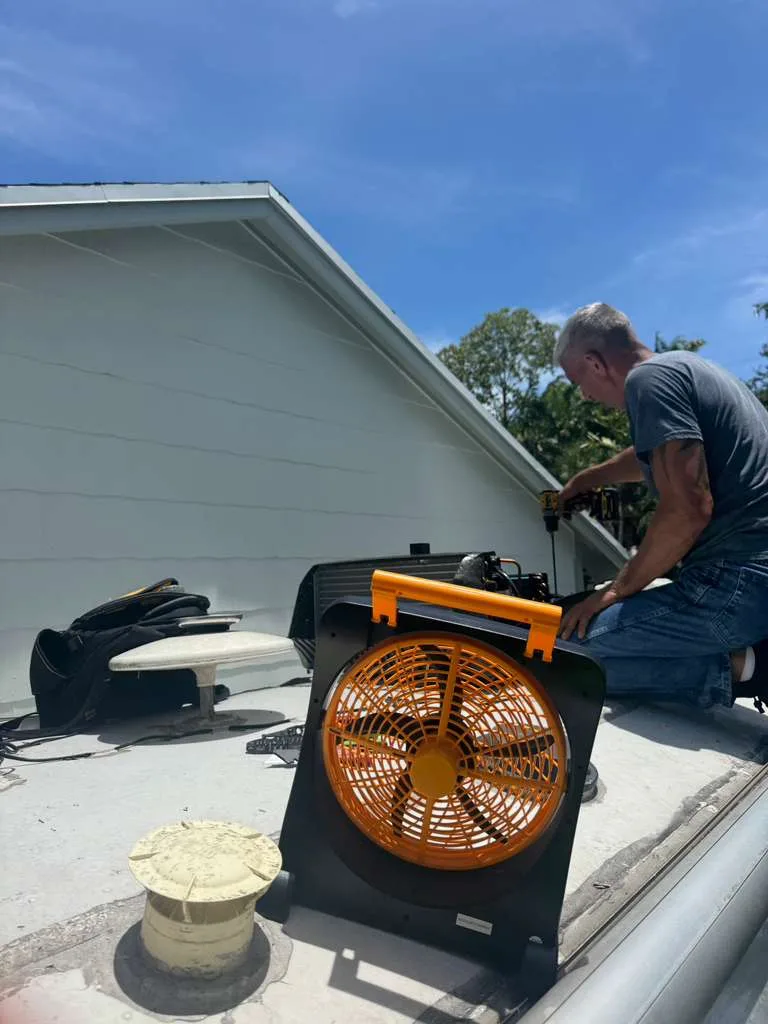
A professional roof sealing service from RV Repair Winter Haven is not simply applying sealant randomly. We follow a systematic approach that covers every potential water entry point on the roof surface.
We begin with roof preparation - cleaning the existing sealant and roof surface of oxidation, dirt, and mold with appropriate cleaner. We probe every existing sealant bead with a tool to assess adhesion and cohesion - sealant that appears intact but separates from the roof surface on probing is removed and replaced rather than covered. Covering separated sealant with new sealant creates a layer that appears adequate but actually traps any existing moisture and accelerates substrate damage.
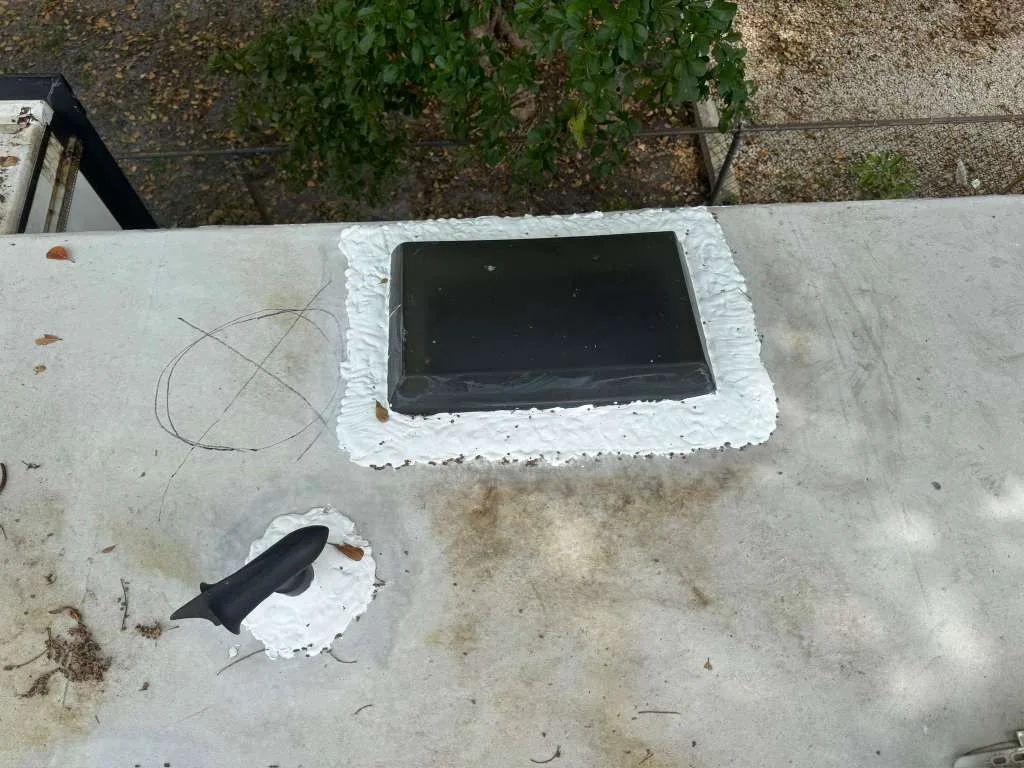
We apply fresh Dicor 501LSW self-leveling lap sealant (white, for horizontal surfaces) around all roof vents (typically 3 to 5 vent bases per RV), both AC unit base perimeters, all skylight or dome light frames, every antenna mount and utility cable entry point, all slide-out roof corner seams, and the perimeter seam where the roof membrane meets the front and rear caps of the rig.
For sidewall-roof junctions that have separated, we use Dicor 501LSW-1 (the non-sag vertical surface formula) to maintain adhesion on vertical and sloped surfaces where the self-leveling formula would run off before curing.
When to Schedule Roof Sealing in Winter Haven
The optimal timing for roof sealing in Winter Haven is before Florida's rainy season (schedule in April or May) and after hurricane season ends (November or December). An annual seal in one of these windows keeps pace with Florida's aggressive sealant degradation rate for most outdoor-stored RVs.
For rigs that are stored indoors or are less than 3 years old, every 18 to 24 months may be sufficient. For rigs stored in full Florida sun on open lots, we lean toward annual sealing given what we find during inspections.
Do not wait until you see a ceiling stain to schedule roof sealing. The visible stain means water has already penetrated enough to saturate insulation and begin affecting structural wood. Preventive sealing catches the failure before it becomes a repair.